
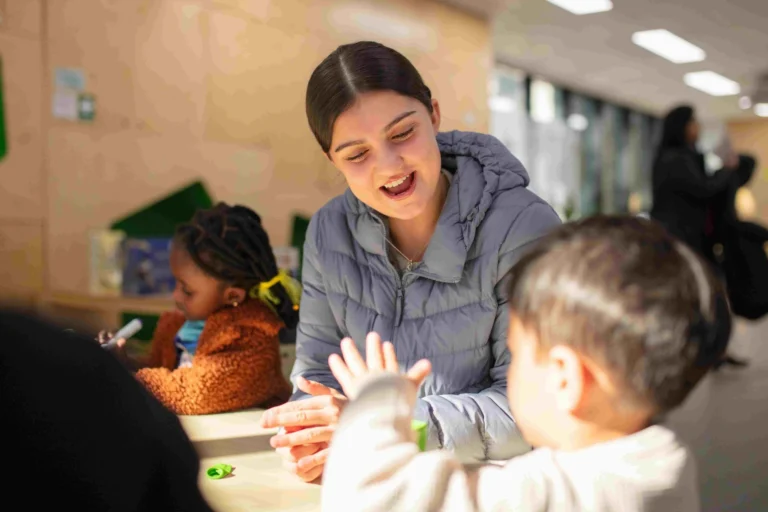
Bringing Reggio Emilia principles into your home begins with seeing learning as a shared journey rather than a series of lessons. It’s about creating spaces that invite curiosity, encourage creativity, and foster meaningful connection in everyday moments. Through simple, intentional experiences — from open-ended play to collaborative discovery — children learn to express themselves, explore ideas, and make sense of the world around them. This approach empowers families to become co-learners, observing and growing alongside their children, and transforming home life into a place where imagination, inquiry, and relationships thrive.
If you’ve ever felt guilty for not doing enough “structured learning” at home, you’re not alone. Many parents worry that without worksheets, flashcards, or scheduled lessons, their children might fall behind.
But here’s the truth — learning doesn’t only happen at a desk. It happens when your child builds a fort, collects shells at the beach, or helps you make pancakes.
In Reggio-inspired education, the home is viewed as an extension of the classroom — a living learning space filled with opportunities to wonder, create, and discover. You don’t need fancy materials or hours of preparation. You simply need curiosity, connection, and an open mind.
In Reggio Emilia philosophy, learning isn’t something done to children — it’s something done with them. Teachers, families, and children all form a community of learners.
At home, this means:
It’s less about having the perfect activity and more about nurturing a culture of curiosity and communication.

Children learn best in environments that invite them to explore. You don’t need to replicate a classroom — even a small corner can spark imagination if it’s thoughtfully arranged.
Try this:
The goal is to create a space that whispers, “Come play, come explore.”
Tip: Rotate materials every few weeks to keep curiosity alive.
In a Reggio-inspired home, your child’s interests become the starting point for learning. If your child loves bugs, read picture books about insects, go on a mini bug hunt, or create clay models of what you find.
Rather than directing every activity, ask open-ended questions:
These kinds of questions encourage critical thinking, language development, and problem-solving — all while keeping the experience playful and engaging.
In Reggio Emilia classrooms, educators document children’s ideas and discoveries through photos, notes, and displays. This practice helps children see their progress and reflect on their thinking.
You can do the same at home by:
This simple act of documentation says to your child: Your thoughts matter. Your work is valued.
Learning doesn’t always look like “teaching.” Sometimes it’s simply sharing moments together — cooking, gardening, storytelling, or walking in nature.
These everyday activities teach valuable life skills and deepen your connection.
For example:
When families learn with their children, every day becomes an opportunity for growth.
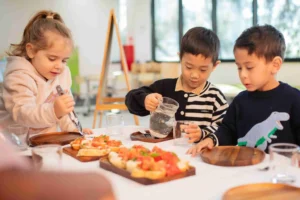
In traditional learning, the focus is often on getting the “right” answer. Reggio-inspired learning, however, celebrates the process.
When your child builds a tower that topples over, celebrate their persistence. When they ask a tricky question, marvel together instead of rushing to find the answer.
By celebrating curiosity, you teach your child that learning is a lifelong adventure — not a checklist to complete.
Reflection helps children make sense of their experiences. It can be as simple as asking, “What was your favourite part?” or “What surprised you today?”
You might:
Reflection builds confidence and helps children develop a sense of ownership over their learning journey.
If your child attends a Reggio-inspired centre, home learning doesn’t stop at the classroom door.
Talk with educators about what your child is exploring at school and find small ways to continue that learning at home. If they’re learning about plants, start a mini herb garden together. If they’re exploring shapes, look for patterns during your neighbourhood walk.
Consistency between home and school helps children feel secure, valued, and understood.

When you create a learning community at home, you’re doing more than supporting early education — you’re building the foundation for lifelong learning.
Children who grow up in environments that honour their voice and curiosity tend to be:
Most importantly, they learn that their ideas matter — and that learning is something joyful, not forced.
Creating a Reggio-inspired learning community at home isn’t about perfection. It’s about slowing down, paying attention, and recognising the magic in everyday moments.
Your home can be a place where questions are celebrated, creativity thrives, and both you and your child grow together.
At Reggio Emilia Early Learning Centre, we believe families are the heart of every learning journey. Our classrooms welcome parents as partners, and our environments are designed to inspire children to explore, imagine, and express themselves freely.
If you want to see how a true learning community feels — one where your child’s ideas are heard and celebrated — we invite you to come and see it for yourself.
Book a visit today and experience how our Reggio-inspired classrooms bring learning to life — for your child, and for you.