
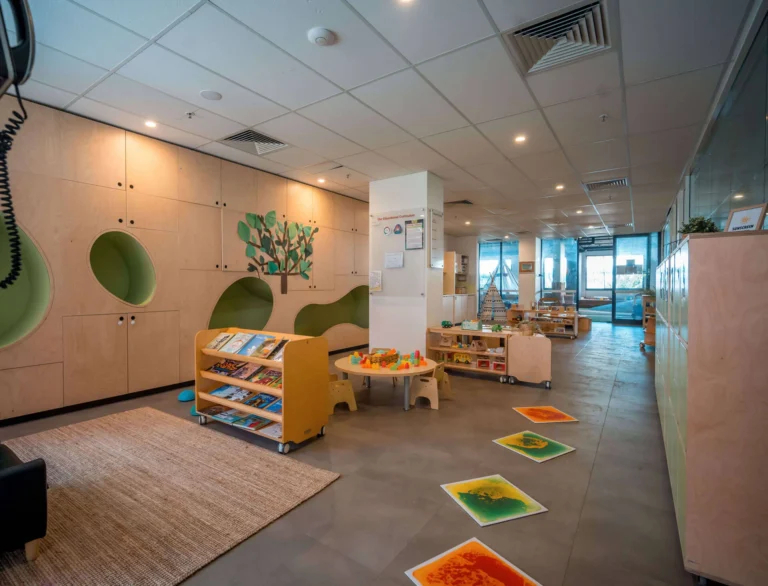
The environment children grow up in plays a powerful role in shaping their development, wellbeing, and confidence. From lighting and layout to sensory stimulation and access to nature, the right physical environment nurtures curiosity, supports independence, and fosters emotional security. While every child is different, there are key environmental features that can positively influence how they learn, play, and grow. In this guide, we explore how thoughtfully designed spaces can help children thrive — and how our centres bring these principles to life.
When you think about your child’s early learning experience, what comes to mind first?
The curriculum? The educators? The daily schedule?
All of those are important—but there’s something just as powerful that’s often overlooked: the environment itself.
The truth is, the environment around a child has a profound impact on how they learn, what they explore, and how safe and confident they feel.
Unfortunately, many early learning spaces today are overcrowded, cluttered, or uninspired. These environments can overwhelm or confuse children, stifling their natural curiosity rather than nurturing it.
So, what if the solution wasn’t just better toys or stricter routines, but rethinking the environment itself?
Let’s talk about why the environment matters—and how we can create spaces that truly nurture young minds.
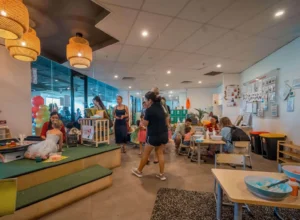
Children learn not just from what adults say, but from what surrounds them. Every detail influences their mood, engagement, and creativity:
When the environment is thoughtfully designed, it becomes a catalyst for joy, confidence, and deep learning.
Children don’t just sit and absorb information—they engage, create, collaborate, and explore.
Young children learn best through their senses. Nature provides rich, hands-on experiences that engage sight, sound, touch, and even smell.
Think about the difference between looking at a picture of a tree and actually sitting beneath one. Feeling the bark, watching the leaves move, hearing the rustle in the wind. These experiences deepen understanding in a way no worksheet ever could.
Nature-based learning allows children to:
These sensory experiences build strong neural connections and support holistic development.
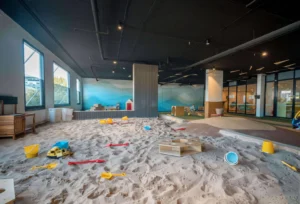
In Reggio Emilia-inspired philosophy, the environment is often called the “third teacher.”
This idea challenges us to stop seeing the classroom as a neutral zone and start seeing it as a powerful teaching tool.
Let’s break this down further.
A thoughtfully designed environment invites children to explore and make choices independently.
This means:
When children can easily access what they need without constant adult help, their confidence soars—and so does their desire to learn.
The physical layout also shapes how children interact. Round tables invite conversation, open floor spaces encourage group play, and shared materials spark collaboration.
This kind of environment:
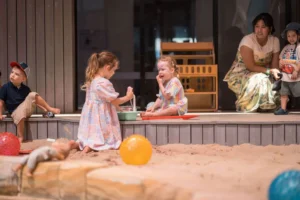
At Reggio Emilia Early Learning Centre, we put the environment at the heart of everything we do, creating spaces that respond to children’s voices and foster their growth.
At our centre, every corner, shelf, and window has been thoughtfully designed to support the power of the environment in early learning.
We:
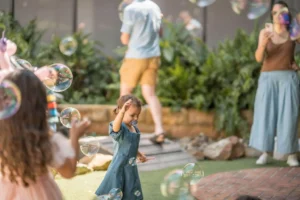
The environment your child learns shapes how they see themselves and the world.
When it’s thoughtfully designed, it:
On the flip side, a poorly designed environment can create barriers, making children feel overwhelmed, anxious, or disinterested.
If you want your child’s early learning experience to be truly transformative, the environment matters.
Book a visit to our Reggio Emilia Early Learning Centre and experience a space that listens, nurtures, and inspires your child every day.
Don’t settle for ordinary—choose an environment that powers your child’s potential.