
In Australia, the Early Years Learning Framework (EYLF) serves as a valuable guide for childcare service providers when creating and implementing their curriculum. This framework is built around key themes, principles, and learning outcomes that ensure children receive the highest quality of education and care possible during their fundamental early years of life. In this blog, we take a closer look at the five EYLF learning outcomes and how we bring them to life at Reggio Emilia Early Learning Centres.
The Early Years Learning Framework (EYLF) is a national guide designed to uphold consistency and quality in early childhood education and care. Supporting children from birth to five years of age, the EYLF helps educators and parents achieve the best learning outcomes for children and pave the way for a smooth transition into primary school.
The EYLF revolves around three core themes that set the foundation for children’s learning and development in Australian childcare services. These themes are:
Together, these themes shape the EYLF, including the five EYLF learning outcomes. Educators and families use these outcomes to plan for children’s ongoing learning and development throughout early childhood. Let’s dive into these five EYLF outcomes and what they look like in action at Reggio Emilia Early Learning Centres.
This EYLF outcome highlights the following components:
A strong sense of identity is the cornerstone of children’s learning, development, and wellbeing. When children have positive experiences and can actively participate in their own learning journey, they develop a sense of belonging. Feeling valued, successful, and accepted encourages children to try new things, express themselves, and navigate new challenges.
Relationships are the foundation for a healthy identity. As children connect with others, they are able to better understand themselves and how they fit into the community. Reggio Emilia encourages these connections, especially between educators, families, and children. It’s all about collaboration–children and families have an active role in shaping our curriculum. This approach to learning creates a dynamic learning environment where curiosity and exploration can thrive. Children feel valued and are actively engaged in their learning journey, which helps them construct their own sense of identity and self-worth.
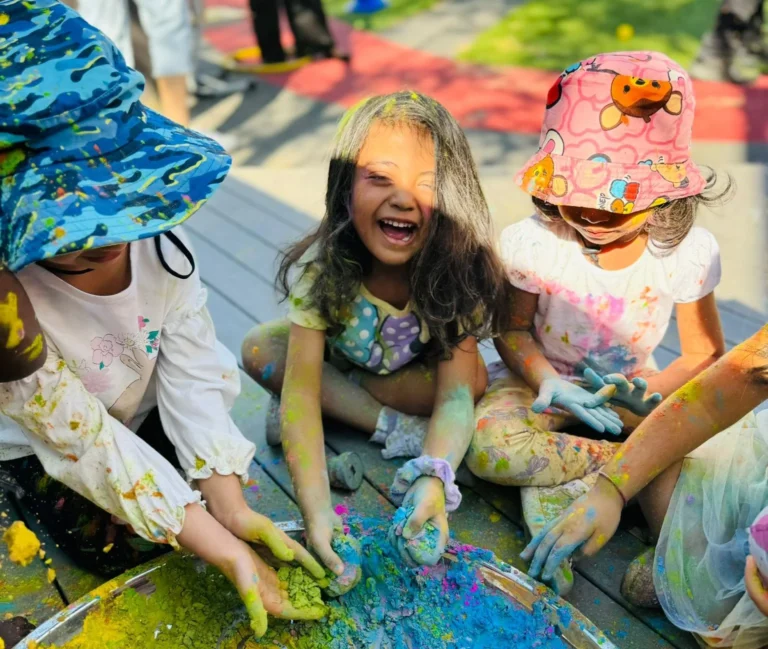
Another aspect of this learning outcome is fostering children’s awareness of their social, linguistic, and cultural heritage. For instance, for Aboriginal and Torres Strait Islander children, awareness of their kinship networks and connections to Country are important in the development of their identity. At Reggio Emilia, we encourage children to explore their heritage and culture. Whether this be through NAIDOC Week activities, Holi celebrations, or our Reggio 5 program, children are given plenty of opportunities to learn about, connect with, and understand where they came from. This works to foster a strong sense of identity from a young age.
This EYLF outcome highlights the following components:
As children grow, they encounter a range of communities, people, and environments that shape their understanding of the world around them. Having a positive sense of identity and forming relationships strengthens their skills, interests, and knowledge, allowing them to become active contributors to their world. Children can broaden their experiences in a childcare setting and connect with their surroundings in exciting new ways.
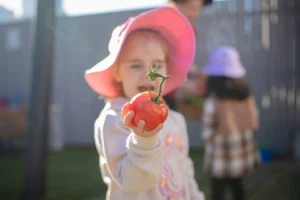
At Reggio Emilia Early Learning Centres, we create a safe, respectful, and welcoming environment for children to grow. Our educators play a key role as facilitators, introducing children to new concepts, spaces, and communities. In doing so, children respond in positive ways. For example, our Earth to Kitchen program teaches our children about the importance of sustainability. A core part of this program is planting seeds and preparing delicious meals with the produce we have grown. This experience helps children connect with sustainability issues and concepts, and recognise their role in caring for our centre garden. This empowers them to actively connect and contribute to the world around them.
In addition to the above, the Reggio Emilia philosophy places a great emphasis on the environment in a child’s learning and development. We refer to the environment as the ‘third educator’, recognising its potential for learning, creativity, and social interaction. By immersing children in an engaging and enriching space, learning becomes an exciting journey filled with discovery and exploration.
This EYLF outcome highlights the following components:
A strong sense of wellbeing helps children feel like they belong and boosts their confidence in who they are. It also nurtures their motivation to embrace new experiences that contribute to their growth and development in the future.
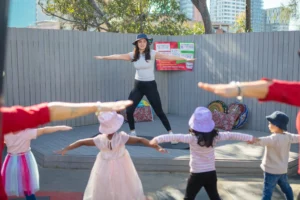
Wellbeing includes aspects of physical health, such as fitness, nutrition, and sleep. At Reggio Emilia, we’ve thoughtfully designed our curriculum to promote active, healthy lifestyles. We incorporate a holistic sports and yoga program for children to develop their motor skills and mindfulness. Whether they’re navigating obstacle courses or practising breathing exercises, children discover new ways to find joy in movement and how to take care of their physical wellbeing.
Along with these physical aspects, wellbeing also relates to mental health, social functioning, and resilience. At Reggio Emilia, we teach our children how to manage emotions and respond to challenging situations. By focusing on emotional wellbeing, our children develop the confidence to participate in their educational journey, building the concentration, cooperation, and curiosity that make learning an enjoyable experience.
This EYLF outcome highlights the following components:
From a young age, children are naturally curious, engaging in exploration, experimentation, questioning, and problem-solving. The Reggio Emilia approach supports these processes by encouraging children to explore and investigate topics that interest them. For example, we incorporate STEM Education into our learning program. STEM Education sparks critical thinking and enables our children to develop their skills and explore their interests in these fields. This works to create confident and involved early learners.
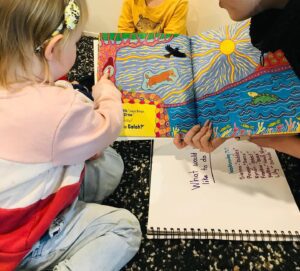
Learning becomes even more meaningful when educators and children share ideas and knowledge. This connection fosters a strong sense of belonging and community. Every day at our centres, educators and children come together in a ‘Yarning Circle’. This special gathering sparks meaningful conversations and provides the opportunity to reflect on our daily learning experiences. It also encourages children to actively contribute to shaping their own educational journey.
Children develop an understanding of themselves and the world around them through practical investigations and project-based learning. This active involvement builds understanding and nurtures the creative thinking process essential for lifelong learning. At Reggio Emilia Early Learning Centres, hands-on projects are a core part of our curriculum. Our approach to project development is unique, as it is not dictated by educators alone. Rather, we actively involve families and children. This process ensures projects are tailored to our children’s unique passions and curiosities, making learning an exciting, dynamic, and engaging experience.
This EYLF outcome highlights the following components:
From the moment they are born, children begin to communicate using eye contact, body movements, and sounds. As they grow, so does their ability to express themselves. It is important to teach children ways to interact, exchange ideas, and convey their feelings. Literacy and numeracy are important aspects of communication, playing a vital role in successful learning and development. In addition to English, children should continue using their home language, as it supports their sense of identity and belonging.
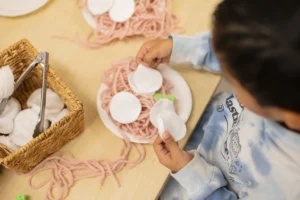
At Reggio Emilia, we understand that children communicate and express themselves in many different ways. As well as verbal communication, Loris Malaguzzi believed that children possess ‘100 Different Languages’ through which they can convey their thoughts, emotions, and understanding of the world. These languages encompass various forms of expression, such as visual arts, movement, storytelling, nature exploration, and dramatic play. We recognise these different languages children use to communicate and encourage them to express themselves in new ways that feel natural to them.
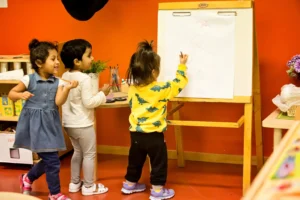
The EYLF is a fantastic guide to supporting children’s early learning and development. Through its five learning outcomes, educators and families can come together to help children develop a strong sense of identity, contribute to their world, build a sense of wellbeing, become confident learners, and effectively communicate. At Reggio Emilia, we go above and beyond to make sure these outcomes are reflected in our educational program. Our collaborative, child-centred approach ensures that children have endless opportunities to learn, play, and thrive. To learn more, reach out to us on 02 9891 2222 or via email at mail@reggioemilia.com.au.