
Key Takeaways
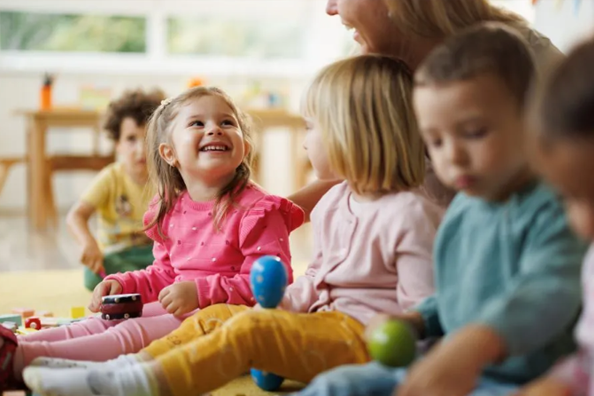
If you have ever watched your child deeply focused on something, stacking blocks, drawing patterns, telling a story, or even just moving their body, you have already seen the “100 languages” in action. The concept comes from the Reggio Emilia approach and reflects a powerful idea: children do not learn or express themselves in just one way.
Instead, they communicate through many “languages,” including drawing, building, movement, music, storytelling, role play, questioning, and even quiet observation.
In many traditional settings, spoken and written language take priority. In a Reggio classroom, every form of expression is valued. Your child is not just learning what to think, but how to express what they think in ways that feel natural to them.
When you step into a Reggio-inspired classroom, it does not feel rigid or uniform. You will not see rows of desks or identical activities. Instead, you might notice small groups of children working together with clay, shaping and reshaping their ideas.
Nearby, another child might be drawing with focus and intention, revisiting their work and adding new details. In another area, children may be building with loose parts, experimenting with balance and structure without even realising they are exploring early engineering concepts.
There is conversation, curiosity, and sometimes quiet concentration. Everything feels purposeful, yet flexible. This is what the “100 languages” looks like in real life, a space where children explore ideas in multiple ways, not just through one defined outcome.
One of the first things you will notice is how calm and intentional the environment feels. Materials are thoughtfully arranged, natural light is often prioritised, and there is a sense of order that invites children to engage. This is not by chance. In the Reggio approach, the environment is considered the “third teacher,” playing a key role in how children learn.
Instead of single-use plastic toys, you will find open-ended materials such as wooden blocks, fabrics, clay, and loose parts. These materials do not tell your child what they should be; they allow your child to decide what they could become. This simple shift encourages creativity, independence, and deeper thinking.
In a Reggio classroom, educators do not simply instruct. They observe, listen, and respond. They pay close attention to your child’s interests and use those interests as the starting point for learning. If children become curious about something, such as shadows, that curiosity can grow into a deeper exploration involving light, movement, drawing, and storytelling.
Learning is not rushed or forced. It evolves naturally. Your child is not passively receiving information; they are actively building knowledge through experience, questions, and discovery.
The Reggio Emilia approach goes far beyond play. When children are given multiple ways to express themselves, they develop stronger communication skills, not just verbally, but emotionally and creatively. They become more confident sharing their ideas because they are not limited by “right” or “wrong” answers.
They learn how to think rather than simply what to think. They develop resilience by trying, adjusting, and trying again. Most importantly, they feel seen. When a child’s ideas are valued, whether expressed through drawing, building, or movement, it strengthens their sense of identity and confidence.
One of the most powerful aspects of the 100 languages is how naturally learning connects across different areas. When your child is building something, they are exploring early maths concepts like balance and size. At the same time, they are problem-solving, communicating ideas, and expressing creativity.
This kind of learning feels meaningful because it is driven by curiosity. It is not divided into subjects or forced into structure. It flows naturally from what your child is genuinely interested in exploring.
In many early learning settings, activities are pre-planned with a clear result, often expecting every child to produce something similar. In a Reggio-inspired environment, the process matters more than the outcome. Two children using the same materials might create completely different things, and that difference is valued, not corrected.
This approach respects your child as an individual. It allows their personality, pace, and interests to shape their learning experience rather than fitting them into a fixed system.
As a parent, you may begin to notice subtle but meaningful changes. Your child might ask more questions, express themselves more creatively, or show deeper focus when engaged in something they enjoy. You may find that instead of bringing home worksheets, they bring home stories, ideas, and conversations.
These are signs of deeper learning. They show that your child is not just absorbing information but actively engaging with the world around them.
At Reggio Emilia Early Learning Centre, this philosophy is part of everyday life. We design environments that invite curiosity, observe and respond to each child’s interests, and provide materials that encourage exploration across multiple forms of expression.
Located conveniently for families around Parramatta, our centre offers more than early education. It offers a space where your child can grow in confidence, creativity, and independence, supported by educators who truly listen and guide.
Every child has something to express, not always in words, but through movement, creativity, and exploration. The question is not whether your child can learn, but whether their environment allows them to express how they learn best. When children are given that freedom, they do not just learn more; they become more confident in who they are.
If you are looking for an early learning environment that truly understands and nurtures your child’s natural way of learning, we would love to welcome you.
Book a visit to Reggio Emilia Early Learning Centre and discover how the 100 languages of children come to life in a space designed just for them.