
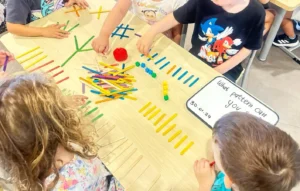

When a child is developing, the neural pathways in their brain can be activated more than at any other stage in life. The more these pathways are connected, the stronger they can develop. With this in mind, the founder of the Reggio Emilia philosophy, Loris Malaguzzi, proposed the concept of “100 Different Languages”. This concept refers to the multitude of ways children can express themselves. It suggests that the more styles children learn to communicate in, the better they can build on new skills and develop vital connections in their brains.
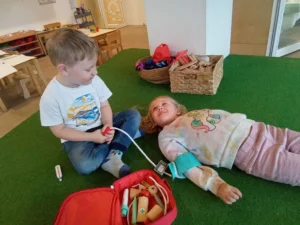
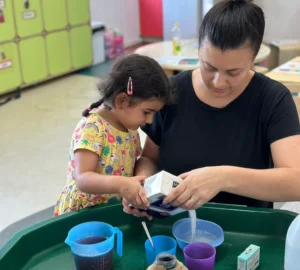
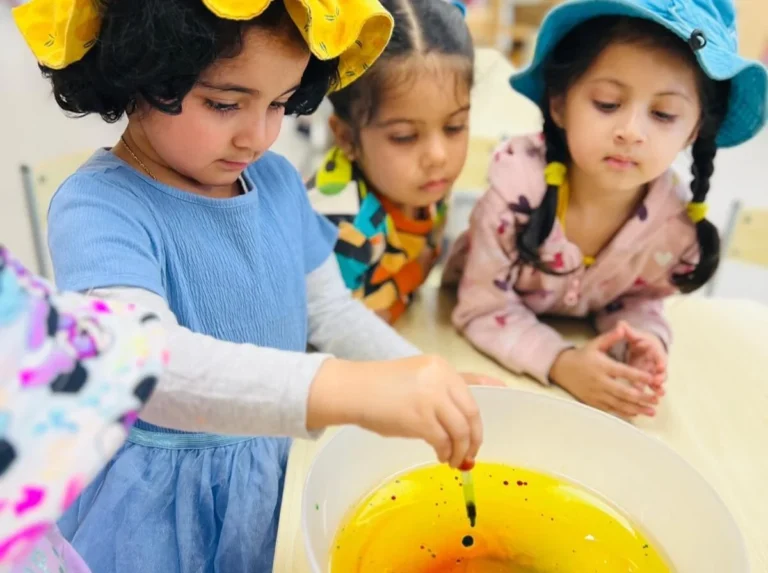
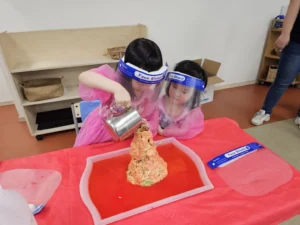
Some of the languages include, but are not limited to, visual arts, music, building and construction. While STEM subjects are often thought of as separate in traditional education, the “100 Different Languages” approach stresses the interconnectedness of disciplines. For example, visual arts, particularly the concept of patterns and colours, may be used in STEM learning experiences to increase understanding of scientific concepts and foster creativity. Dramatic play is another language that may be used to show a child’s interest in STEM, such as a doctor’s surgery roleplay like the one pictured.